





近日,食品与生物工程学院杨潇教授在食品领域TOP期刊《Food Chemistry》发表题为“Highly efficient catalytic hydrogen bond organic frameworks (HOFs)@HRP integrated with bowl-shaped organic SERS substrates for ultrasensitive detection of BPS”的研究论文。食品与生物工程学院杨潇教授和理学院何毅博士为论文共同通讯作者。
随着公众对环境和食品安全的日益关注,痕量双酚S(BPS)的检测变得至关重要。本研究基于氢键有机框架-辣根过氧化物酶复合物(HOFs@HRP)与碗状中空结构表面增强拉曼散射基底(AFRNBs@AuNPs),开发了一种超灵敏的表面增强拉曼散射生物传感器用于检测BPS。得益于优异的生物相容性与温和的合成条件,HOFs被用作HRP的保护载体,有效维持了酶的催化活性。同时,成功制备的碗状中空结构AFRNBs@AuNPs可作为高效SERS基底。当体系中存在BPS时,BPS与其适配体间更强的亲和力引发置换反应,促使HOFs@HRP与AFRNBs@AuNPs结合,从而催化TMB转化为oxTMB并产生可检测的拉曼信号。基于此机制,该生物传感器对BPS的检测限达1.28×10⁻¹² M。该方法为痕量BPS检测开辟了新途径,展现出广阔的应用前景。
研究图文
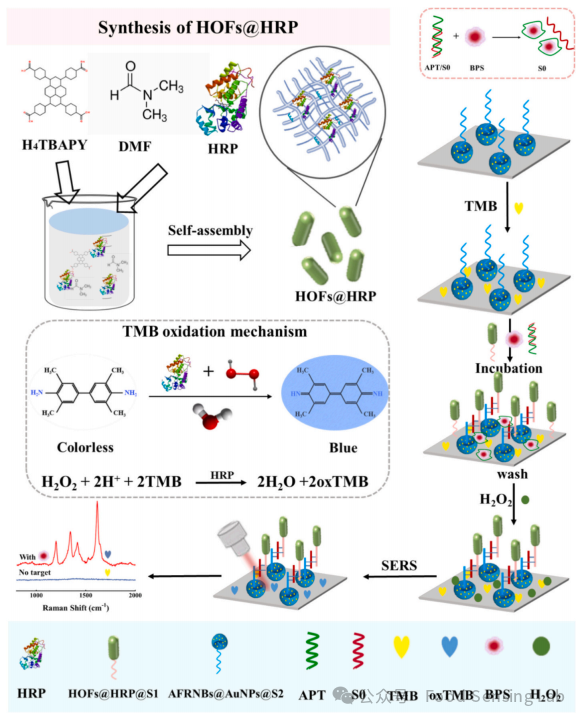
Scheme 1. Principle of the BPS-Responsive SERS Biosensor.
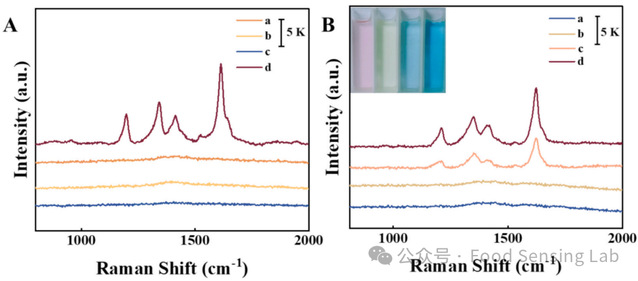
Fig. 1. Feasibility of the SERS sensor. (A) Raman spectra of AFRNBs@AuNPs (curve a); AFRNBs@AuNPs with TMB (curve b); AFRNBs@AuNPs@S2 with TMB (without BPS) (curve c); AFRNBs@AuNPs@S2 with TMB (with BPS) (curve d); (B) Raman spectra of oxTMB (without BPS and H2O2) (curve a); Raman spectra of oxTMB (with BPS, without H2O2) (curve b); Raman spectra of oxTMB catalyzed with HRP (with H2O2) (curve c); Raman spectra of oxTMB catalyzed with HOFs@HRP (with BPS and H2O2) (curve d).
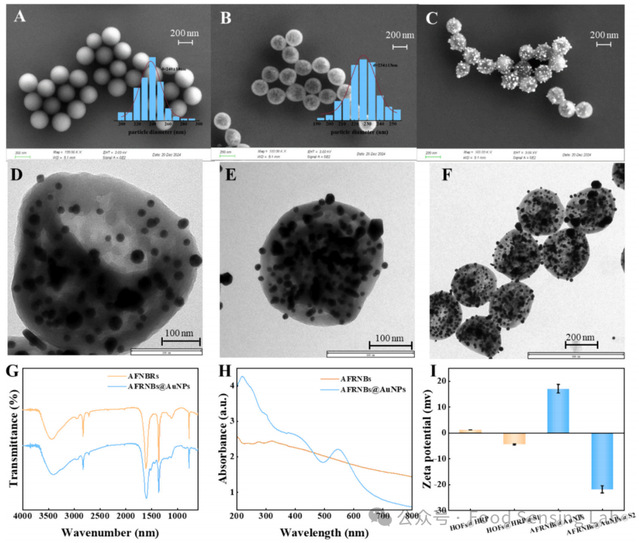
Fig. 2. (A-C) SEM characterization diagram of AFRNSs, AFRNBs, AFRNBs@AuNPs. (D–F) TEM characterization diagram of AFRNBs@AuNPs. (G) FT-IR spectra of AFRNBs, AFRNBs@AuNPs. (H) UV–vis spectra of AFRNBs, AFRNBs@AuNPs. (I) Zeta potential diagram of HOFs@HRP, HOFs@HRP@S1, AFRNBs@AuNPs, AFRNBs@AuNPs@S2.
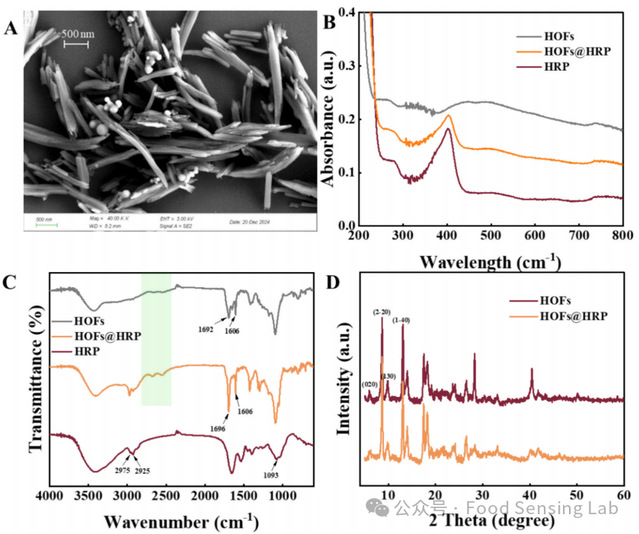
Fig. 3. (A) SEM characterization diagram of HOFs@HRP. (B) UV–vis spectra of HOFs, HRP, HOFs@HRP. (C) FT-IR spectra of HOFs, HRP, HOFs@HRP. (D)XRD spectra of HOFs, HOFs@HRP.
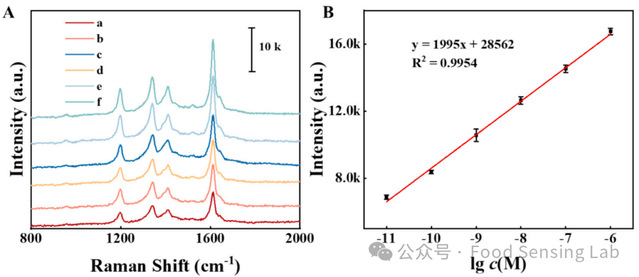
Fig. 4. (A) SERS spectra of BPS concentrations ranging from 1.00 × 10⁻¹¹ M to 1.00 × 10⁻⁶ M. (B) Relationship between the intensity of SERS and log concentration of BPS. Error bars represent mean ± standard deviation (n = 3).
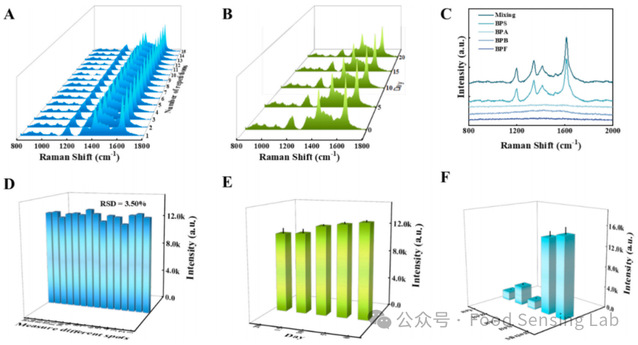
Fig. 5. (A) Raman intensity peak profiles at different positions on the substrate. (B) Raman intensity peak distribution over 0–20 days of storage on the substrate
under natural conditions. (C) Selectivity of SERS biosensors for interfering compounds (BPA, BPB, BPF). (D) Histogram of Raman intensity at different positions on the substrate. (E) Histogram of Raman intensity at 1629 cm⁻¹ for SERS biosensors under natural conditions. (F) Histogram of Raman intensity at 1629 cm⁻¹ for SERS biosensors under different interferences. Error bars represent mean ± standard deviation (n = 3).
综上所述,本研究构建了一种基于AFRNBs@AuNPs与HOFs@HRP纳米复合材料的生物传感器,实现了对BPS的高特异性、高灵敏度检测。该SERS生物传感器展现出优异性能,主要得益于以下优势:HOFs的多孔结构和良好生物相容性为HRP提供了理想微环境,既保护了酶活性,又显著增强了对TMB的催化效率;AFRNBs表面均匀分布的AuNPs形成了稳定的增强基底,大幅提升了拉曼信号的均一性与强度;该传感器对BPS的检测范围宽(10⁻¹¹ M至10⁻⁶ M)、灵敏度高,检测限低至1.28×10⁻¹² M。因此,该方法不仅为构建高稳定性、高灵敏度生物传感器提供了新思路,更为检测环境与食品样本中痕量BPS建立了可靠的技术路径,为其实际应用奠定了坚实基础。
然而,未来规模化应用的核心瓶颈在于拉曼传感基底的可扩展、低成本制备及其长期储存稳定性。突破这些挑战,对于推动该技术从先进的实验室方案转化为常规食品安全监测的实用工具具有重要意义。